The Group Chat That Could Save Your Career: How UK Models Are Quietly Building Their Own Safety Net
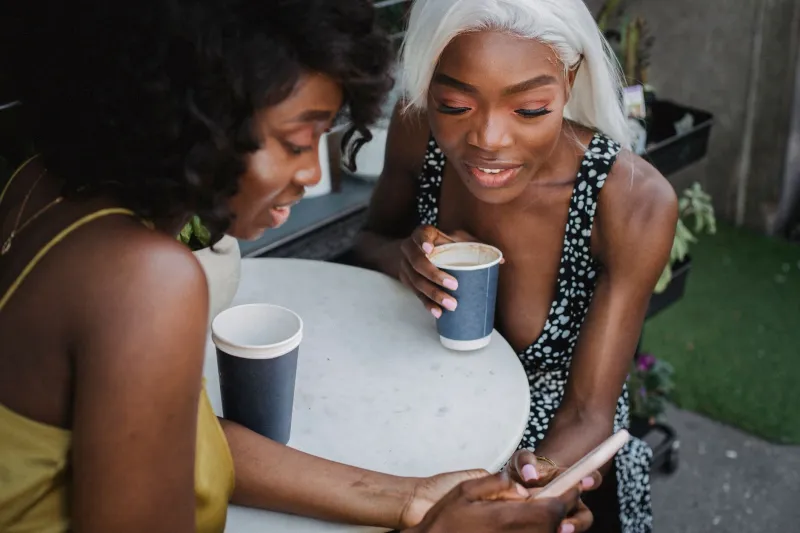
There's a message that gets passed around in certain circles. It doesn't appear in any agency handbook, it won't come up in your new model induction, and no booker is going to flag it for you. It lives in a WhatsApp group, shared between people who've never met in person but who trust each other with the kind of information that can genuinely change — or protect — a career.
"Someone posted a name," says Priya, a 24-year-old model based in Birmingham who asked us not to use her surname. "A photographer. Said he'd asked her to do things she wasn't comfortable with during a test shoot. Within an hour, four other women in the group had the same story about the same man. None of us had ever spoken before. But we all knew."
This is how safety works in 2024 for a growing number of UK models. Not through formal complaints processes — which many find slow, opaque, or quietly hostile — but through peer-built digital networks that operate faster, more honestly, and with far more nuance than most official structures ever could.
The Problem That Made the Solution Necessary
Let's be honest about what we're talking about here. The UK modelling industry has a protection problem. Not universally, not in every corner — but persistently, and often in the spaces where newer or less established models are most vulnerable.
Predatory photographers offering "portfolio building" in exchange for compliance. Agents who pressure models into bookings that make them uncomfortable. Casting directors whose behaviour crosses lines that nobody seems willing to document officially. The industry has known about these dynamics for decades. The formal response has been, at best, inconsistent.
So models built their own systems. Quietly, practically, and with the kind of collective intelligence that comes from shared experience.
"There was no big moment where someone decided to start a safety network," explains Jade, a model-turned-community-organiser in Manchester. "It just... evolved. A few of us were already in a group for job leads. Then someone flagged a dodgy casting call. Then someone else shared a bad experience with an agent. And suddenly the group had a completely different purpose."
What These Networks Actually Look Like
The landscape is deliberately fragmented — and that's partly the point. A single centralised database would be easier to find, easier to challenge legally, and easier to shut down. Instead, what's emerged is a distributed ecosystem of overlapping communities.
WhatsApp groups are the most common format: small, often regionally organised, with membership by personal recommendation only. Some are hyper-local — "Leeds model girls" type arrangements — while others are organised around niche areas of the industry, like commercial print or fitness modelling. Facebook groups, despite the platform's declining cool factor, remain popular for their search functionality and the ability to pin important posts. Instagram close-friends lists are used by some models to share time-sensitive warnings with a trusted inner circle without broadcasting publicly.
And then there are the more structured operations. Jade's network, which she's built over three years, now has over 400 members across the North of England. It has informal moderators, a pinned list of vetting questions for new members, and an unwritten but widely understood code: what's shared in the group stays in the group, names are only posted with the explicit consent of the person sharing the experience, and no one is pressured to go public.
"We're not a gossip forum," she's clear on this. "We're a resource. There's a difference between warning someone and dragging someone. We try to stay on the right side of that."
The Intelligence These Groups Generate
Ask anyone who's been part of one of these networks long enough, and they'll tell you: the value isn't just in the warnings. It's in the accumulated, crowd-sourced knowledge about how the industry actually operates.
Which agencies genuinely pay on time. Which photographers have solid reputations for professionalism on set. Which casting directors are worth cultivating relationships with, and which ones treat models as interchangeable. What a fair day rate actually looks like for a given type of job. Whether a particular brand's shoot conditions are worth the fee they're offering.
"I learned more in six months in that group than in two years with my first agency," says Saoirse, a model from Glasgow now working across Scotland and the North of England. "My agency told me what they wanted me to know. The group told me what I needed to know."
This distinction — between curated industry information and genuine peer intelligence — matters enormously, particularly for models from backgrounds that don't come with built-in industry connections. The daughter of a London fashion insider arrives with a contact book. Everyone else used to arrive with nothing. Now, at least some of them arrive with a group chat.
The Legal Tightrope
None of this comes without risk, and the models running these networks know it. Defamation law in the UK is notoriously claimant-friendly, and the prospect of a well-resourced photographer or agent pursuing legal action against a model for something posted in a private group is not hypothetical — it's happened.
"We had to get really careful about language," admits Jade. "There's a big difference between 'this person did X to me' — which is a personal account of your own experience — and 'this person is a predator' — which is a characterisation that can get you in trouble. We coach new members on that."
Some groups have sought informal legal advice. Others have developed their own internal guidelines through trial and error. The consensus, broadly, is that first-person accounts shared in genuinely private spaces carry more protection than public posts, but that no one should assume they're completely shielded.
It's an imperfect system operating in an imperfect legal landscape. But for many models, the alternative — silence, isolation, and hoping the industry eventually sorts itself out — is no longer acceptable.
More Than Just Safety
It would be reductive to frame these communities purely as warning systems. They're also, increasingly, spaces for career development, mental health support, and the kind of solidarity that the industry's competitive culture tends to discourage.
Job leads get shared. Portfolio feedback gets offered. Models who've had a rough booking debrief with people who actually understand what they're going through. First-generation models — those without family in the industry, those from working-class backgrounds, those who came to modelling later in life — find in these groups something that established models often take for granted: a network.
"There's this idea that models are always competing with each other," says Priya. "And yeah, sometimes we are. But mostly, we're just people trying to do a job safely and get paid fairly. Once you're in a community like this, you realise how much more you have in common than you have in competition."
What the Industry Should Be Learning
Here's the uncomfortable truth for agencies, industry bodies, and the brands that benefit from models' labour: the fact that these networks exist at all is an indictment of the formal support structures that should already be doing this work.
Models shouldn't need to build their own safety infrastructure. They shouldn't have to crowdsource information about which professionals are safe to work with. They shouldn't be navigating legal grey areas in WhatsApp groups because the official channels feel too risky or too slow.
But until the industry takes its duty of care seriously — really seriously, not in a PR-statement way — these communities will keep growing. And honestly? Good. Because right now, for a lot of UK models, the group chat is the safest place in the industry.