Still Invisible: The Disabled Models Challenging UK Fashion's Half-Hearted Attempts at Inclusion
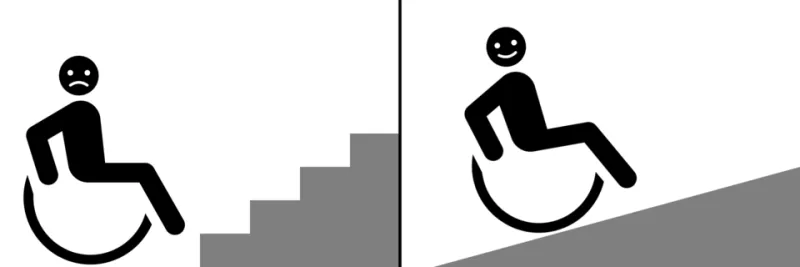
Photo: MissLunaRose12, CC BY-SA 4.0, via Wikimedia Commons
Let's be honest about something. When a major UK retailer features a wheelchair user in a summer campaign, the response is often a wave of social media praise — as if simply existing in an advert is an achievement worthy of a standing ovation. For disabled models, that reaction is exhausting.
"I don't want to be inspirational," says Jade, a 24-year-old model and amputee from Bristol who has been working in the industry for three years. "I want to be booked. There's a difference."
That difference — between being used as a symbol and being treated as a professional — sits at the heart of what's still fundamentally broken about disability representation in UK fashion.
The Gap Between the Glossy Campaign and the Casting Room
On the surface, things look like they're improving. You can scroll through the websites of several high street giants and spot at least one image featuring a model with a visible disability. Brands including ASOS, River Island, and Marks & Spencer have made visible efforts in recent years to broaden the range of bodies they show.
But scratch beneath that surface, and a more complicated picture emerges.
"The campaign might look inclusive, but was the casting process accessible?" asks Farai Mujuru, a disability rights advocate and consultant who works with fashion brands on inclusive practice. "Was the studio wheelchair accessible? Was there a BSL interpreter available for Deaf talent? Was the brief written in a way that didn't assume able-bodied norms? Usually, the answer to at least one of those questions is no."
This is the disability visibility gap in action: brands achieving the optics of inclusion without doing the structural work that would make that inclusion real.
Barriers Before the Camera Even Switches On
For many disabled models, the obstacles arrive long before they step in front of a lens.
Casting studios in London — where the bulk of UK fashion work is concentrated — are notoriously variable in their accessibility. Steps without ramps, heavy doors without automatic openers, and bathrooms that technically comply with building regulations but are practically unusable are all common complaints.
Marcus, a 31-year-old model who uses a power wheelchair and is based in London, describes the experience of attending castings as a logistical and emotional gauntlet. "You're already managing your disability on a daily basis, and then you turn up to a casting and discover there's no lift, or the accessible entrance is round the back through a car park," he says. "It signals immediately that they didn't really think about you when they set this up."
Digital accessibility presents its own set of challenges. Many model agency websites — the first port of call for anyone wanting to submit their portfolio — are built without screen reader compatibility, relying on image-heavy layouts that assistive technology can't parse. Application processes that require video submissions without captioning options effectively exclude Deaf talent from the outset.
"If your front door is inaccessible, don't be surprised when disabled people aren't walking through it," says Mujuru.
The Inspiration Trap
For those who do break through, a different kind of barrier awaits: the industry's deeply ingrained tendency to frame disability through the lens of inspiration rather than identity.
The "brave" narrative — in which a disabled model is celebrated primarily for overcoming adversity rather than for their professional skill or aesthetic appeal — is something virtually every disabled model interviewed for this piece mentioned unprompted.
"I've had briefs where the concept was literally just 'your story,'" says Jade. "Not a fashion story. Not a brand story. My story. Because apparently the most interesting thing about me is that I'm missing a limb, not that I'm a good model."
This framing does more than reduce individual models to their diagnosis or condition. It also limits the kinds of roles disabled models are considered for. If the only narrative available is one of triumph over adversity, disabled models will only ever be cast in contexts where that narrative is relevant — which rules out the vast majority of fashion work.
Who's Actually Doing It Well?
It would be unfair not to acknowledge the brands and agencies genuinely pushing in the right direction.
Zebedee Management remains the benchmark for specialist representation of disabled and visually diverse talent in the UK, with a client roster that spans commercial, editorial, and runway work. Their approach — treating accessibility as a baseline rather than a bonus — is one other agencies could learn from directly.
On the brand side, adaptive clothing lines like those developed by Marks & Spencer and John Lewis have created more natural contexts for casting disabled models, because the product itself is designed with disability in mind. When the clothes are made for you, the campaign tends to follow.
Some independent designers showing at London Fashion Week have also made strides — particularly those with personal connections to disability, who tend to approach casting with a more considered and less tokenistic eye.
But these remain exceptions. The mainstream of UK fashion still has a long way to go.
What Genuine Inclusion Actually Looks Like
So what would it actually take to close the disability visibility gap? The models and advocates we spoke to were consistent in their answers.
First, accessibility has to be built in from the start — not retrofitted as an afterthought. That means accessible studios, accessible websites, accessible briefs, and accessible communication throughout the process.
Second, disabled models need to be cast across the full range of fashion content — not just in campaigns explicitly about disability or adaptive clothing. A disabled model can sell a coat, a perfume, a pair of trainers. Treating them as category-specific talent is its own form of exclusion.
Third, the creative brief matters. If the concept centres on a model's disability as the story, rather than the clothes or the brand as the story, it's worth asking who that actually serves.
And finally, disabled models should be in the room when these conversations are happening — not consulted after the decisions have been made, but genuinely involved in shaping the creative and commercial direction of the brands that want to represent them.
Every Body. Every Story. Every Runway.
At Modelling4All, that's not just a tagline. It's a commitment. And right now, the fashion industry is falling short of it for disabled talent in ways that are visible, measurable, and — crucially — fixable.
The models are ready. The question is whether the industry is willing to meet them properly.