Baby on Board, Career in Doubt: The Quiet Crisis Facing Mothers in UK Modelling
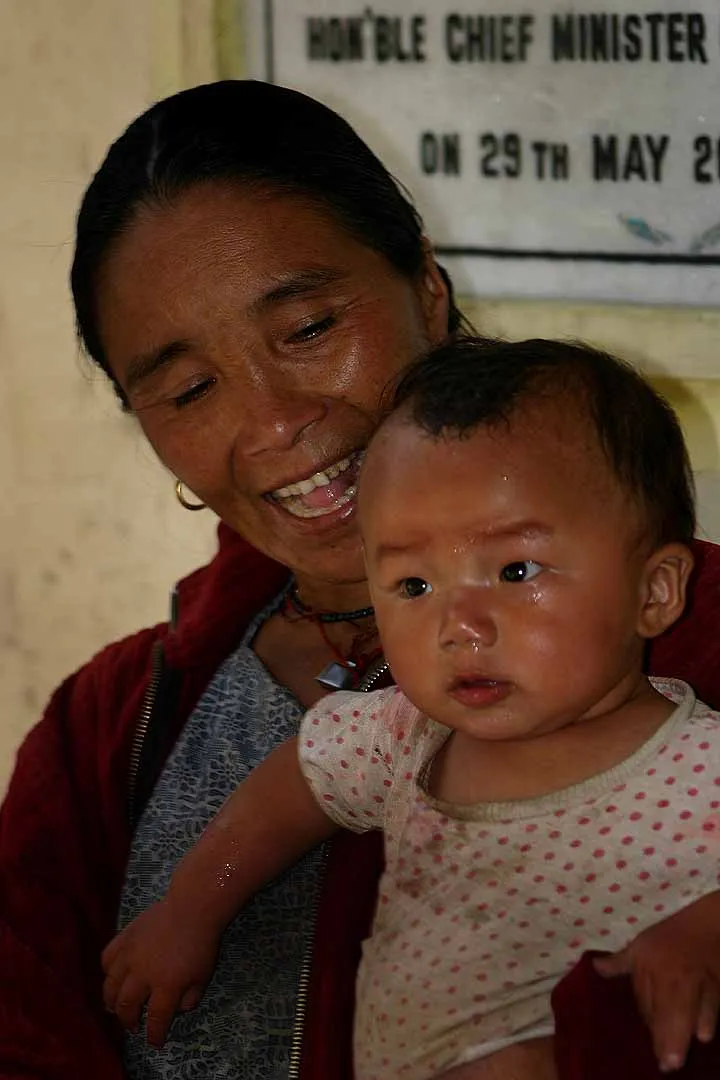
Photo: Steve Evans from India and USA, CC BY 2.0, via Wikimedia Commons
When Kezia found out she was pregnant, her first call was to her mum. Her second was to her agency. The response from her mum was immediate joy. The response from her agency was, she says, a long pause followed by: "We'll need to have a chat about your bookings."
That chat, as it turned out, was the beginning of the end of her relationship with the agency she'd been with for four years.
"There was no conversation about how we'd manage things going forward, no talk of maternity provisions, nothing," Kezia recalls. "Just this vague sense that I'd become a problem to be managed. Within three months, I'd been quietly moved to the back of the roster and the work had dried up."
Kezia's story isn't unusual. Across the UK, models who become pregnant — and those who return to work after having children — describe an industry that treats motherhood as a liability rather than a life experience. In a sector that has made significant, if imperfect, strides on body diversity and representation, the maternal penalty remains one of fashion's most stubborn and least-examined blind spots.
What the Industry Won't Say Out Loud
The modelling industry operates largely on informal relationships, short-term contracts, and the unspoken language of availability. Agencies rarely have explicit policies about pregnancy because they rarely need to — models aren't employees in the traditional sense, which means the protections that workers in other industries take for granted simply don't apply.
There's no statutory maternity pay for a freelance model. No right to return to the same roster position after a career break. No obligation on an agency to hold space for someone who steps back for six months. The legal grey area is vast, and models — often young, often without independent legal advice — rarely know where they stand.
"I didn't realise until it was too late that I had almost no formal protections," says Mara, a Birmingham-based model who returned to work after her second child. "My agency contract had no maternity clause whatsoever. When I came back, they were perfectly pleasant about it, but the bookings didn't come back with me."
This is the motherhood penalty in action: not always a dramatic, door-slamming dismissal, but a quiet, cumulative withdrawal of opportunity that's almost impossible to challenge because it's never explicitly stated.
The Body Conversation Nobody Wants to Have
There's another dimension to this that sits uncomfortably even in progressive conversations: the industry's relationship with post-pregnancy bodies.
Despite years of body positivity rhetoric, the modelling industry's working standards remain largely unchanged. Sample sizes are still small. The "return to pre-baby body" narrative — while increasingly challenged in mainstream culture — persists in fashion casting, where decisions are made fast and assumptions about appearance are rarely examined.
Models who return after having children frequently describe being told, in terms that are carefully indirect but unmistakably clear, that they need to "get back to where they were" before they'll be considered for major bookings again. The message lands differently depending on the model's specialism — commercial work tends to be more forgiving than editorial — but the underlying expectation is consistent.
"I came back feeling brilliant," says Jess, a London-based model and mother of one. "I felt strong and I looked great, honestly. But I was a size 12 where I'd been a 10, and suddenly I was being steered towards 'plus' castings even though I'd never worked in that category. It was like I'd been recategorised without anyone telling me."
Shoot Conditions That Simply Don't Work for Mothers
Beyond the career trajectory issues, there are the day-to-day practicalities of working as a mother in an industry that wasn't designed with parents in mind.
Shoot days are long — twelve-hour days are common, and the expectation of immediate availability at short notice is industry standard. For a breastfeeding mother, that presents real challenges. Facilities for nursing on set are inconsistent at best. Childcare costs are rarely factored into model fees. And the culture of last-minute bookings — common across the industry — is almost incompatible with the logistics of managing a young child.
"I had to turn down a significant job because the call came through at 5pm for a 7am start the next day," says Mara. "There was no malice in the booking — that's just how it works. But it doesn't work for me. And nobody in the chain was thinking about whether it could."
This is where comparison with other industries — and other countries — becomes instructive. Scandinavian fashion markets, where parental leave culture is deeply embedded, tend to approach model scheduling with considerably more flexibility. Some agencies in the Netherlands and Germany have introduced explicit maternity policies and return-to-work pathways. In the UK, such formal structures are vanishingly rare.
The Models Making It Work — On Their Own Terms
Not every story here is one of loss. There are models who have navigated this landscape successfully — but their routes have required resilience, resourcefulness, and often a willingness to build their own infrastructure when the industry's failed them.
Some have leveraged social media to maintain visibility and client relationships during and after pregnancy, bypassing agency dynamics entirely. Others have found that commercial and lifestyle modelling — campaigns for homeware, food, family brands — actively welcomes the authenticity that comes with being a parent. A few have found agencies, typically smaller and more progressive, who've been genuinely supportive.
"I reframed my whole positioning," says Kezia, who has since rebuilt her career independently. "I stopped trying to go back to what I was before and started leaning into who I am now. A mother, a woman with a different body and a different story. The clients who want that are out there. You just have to find them."
The Structural Change That Fashion Needs to Make
Individual resilience is admirable. But it shouldn't be the only option.
At Modelling4All, we believe that fashion's commitment to inclusion has to extend across every life stage — and that means taking the motherhood penalty seriously as a structural issue, not a personal one. Agencies need explicit maternity policies. Shoot conditions need to account for the realities of working parenthood. The industry's body standards need to stop treating post-pregnancy bodies as problems to be corrected.
Every body has a story. A mother's body — changed, strong, and carrying the evidence of a life fully lived — has one of the most powerful stories of all. It's time British fashion started listening to it.