Runways, Realities, and Resistance: The Plus-Size Models Refusing to Wait for London Fashion Week's Permission
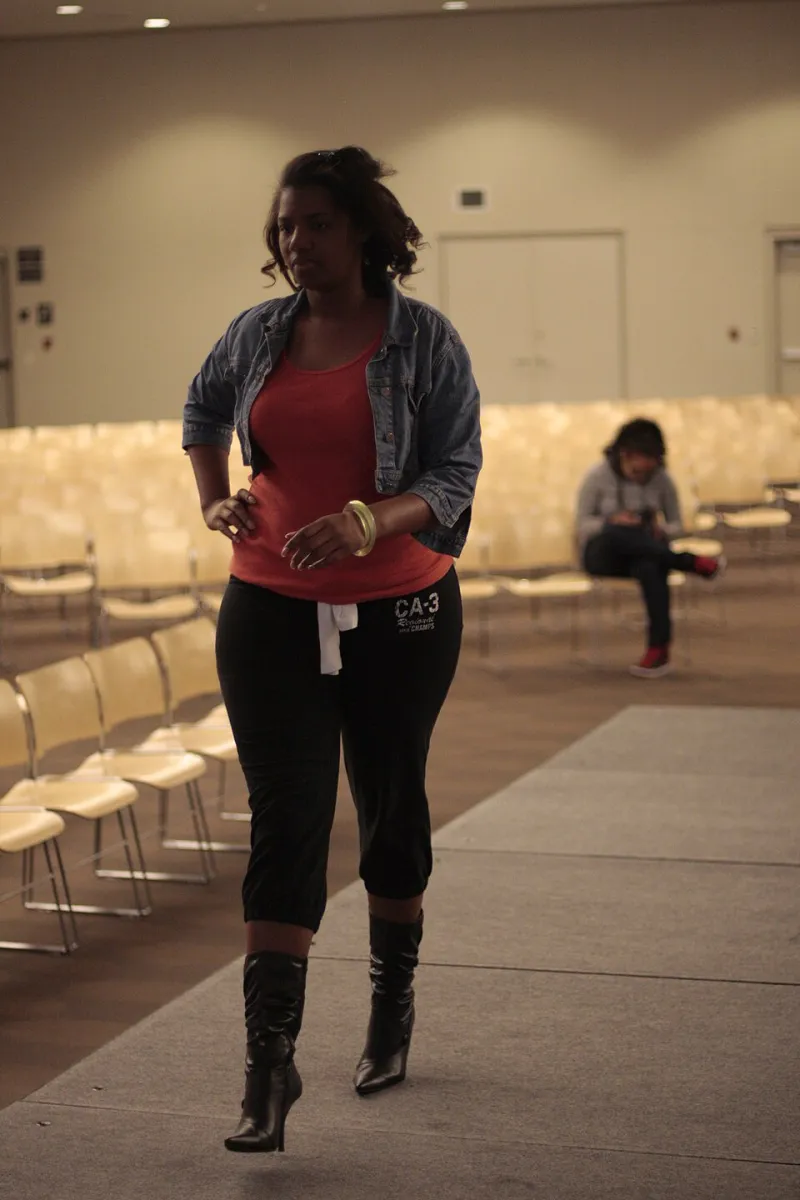
Photo: Michael Oh, CC BY 2.0, via Wikimedia Commons
There's a particular kind of exhaustion that comes from being told, repeatedly and in different ways, that your body is a trend. Ask any plus-size model working the British fashion circuit and they'll recognise it immediately — that moment when a casting director's enthusiasm curdles into something more conditional. We love your look, but maybe next season. Next season, it turns out, has a habit of never quite arriving.
London Fashion Week, for all its reputation as one of the world's most forward-thinking style events, has been slow — stubbornly, visibly slow — to reflect the bodies that actually buy the clothes being shown on its catwalks. The average UK woman wears a size 16. The average LFW runway model does not. That gap isn't just a creative oversight. It's a commercial one. And increasingly, the industry is being forced to acknowledge it.
The Gatekeeping Problem
Size exclusivity in high fashion has always been dressed up as aesthetic consistency. The argument — rarely stated plainly but endlessly implied — is that clothes simply look better on a certain kind of frame. It's a claim that has never really survived scrutiny, but it's been remarkably durable.
"What it actually comes down to is inertia," says one London-based casting director who asked not to be named. "Designers sample in one size, showrooms stock one size, and agencies historically sent one type. It becomes self-reinforcing. Nobody wants to be the first one to change the mould because change costs money and attention, and fashion people are, frankly, risk-averse in ways they'd never admit publicly."
That inertia is starting to crack. Not because the industry has suddenly developed a conscience — though some within it genuinely have — but because the numbers are making the old position increasingly difficult to defend.
What the Market Is Actually Saying
British retail has been sending a clear signal for years. The plus-size clothing market in the UK is worth billions, and brands that once treated larger sizing as an afterthought are now scrambling to position themselves as inclusive. ASOS, River Island, and newer labels like Navabi have all expanded their size ranges significantly. The question LFW is slowly being asked is: why doesn't the runway reflect that reality?
Some designers are already answering it. Sinéad O'Dwyer, whose work has become a touchstone for discussions about body diversity in British fashion, has consistently cast models across a wide size range — not as a statement, but as a baseline. "The idea that there's one ideal body for clothes is just not interesting to me creatively," she's said previously. "Clothes interact differently with different bodies. That's not a problem. That's the whole point."
Buyers, too, are shifting. Wholesale buyers and retail partners are increasingly asking about size range availability before they commit. When the runway only shows a garment on one body type, it creates a disconnect with the buying conversation that follows. Inclusivity, it turns out, is also just good product presentation.
The Models Leading the Charge
Behind every systemic shift are individuals doing the daily work of pushing against it. The plus-size and mid-size models currently reshaping British fashion aren't waiting for structural change — they're creating it through visibility, persistence, and an increasingly loud refusal to be grateful for scraps.
Models like Felicity Hayward, who has been vocal about the double standards applied to plus-size talent in the UK industry, and Callie Thorpe, who has built a significant platform around body confidence and fashion, represent a generation that isn't asking for a seat at the table so much as building new tables entirely. Social media has been instrumental here — it's allowed models to bypass traditional gatekeepers and build direct relationships with audiences and brands.
Mid-size models occupy a particularly interesting space in this conversation. Often too large for straight-size castings and occasionally considered too small for explicitly plus-size briefs, they've historically fallen through the cracks of a system that prefers neat categories. Their growing presence on British runways and in editorial work is quietly dismantling the binary that's long defined how the industry thinks about size.
Why "We're Working On It" Isn't Good Enough
London Fashion Week does have more size diversity than it did a decade ago. That's worth acknowledging. But progress measured against a very low baseline isn't the same as genuine change. When plus-size models appear on LFW runways, it's still frequently treated as noteworthy — a headline in itself. Until it stops being remarkable, it remains an exception rather than a norm.
Agencies have a significant role to play here that often goes undiscussed. The models that get put forward for castings are the models that get seen. For years, many mainstream London agencies maintained plus-size divisions that functioned almost separately from their main boards — a structural segregation that reinforced the idea that larger models were a niche product rather than a core offering. That's changing, slowly, but the pace matters.
"You can't just open a 'curve' board and call it inclusive," says one model who has worked with several major UK agencies. "Inclusion means the same conversations, the same opportunities, the same rates. It means your agent fights for you the same way they fight for everyone else. That's still not universal."
The Business Case That Can't Be Ignored
Perhaps the most powerful argument for change — and the one most likely to actually accelerate it — is the commercial one. Consumers are increasingly making purchasing decisions based on brand values, and authenticity around representation is something audiences can spot immediately. A brand that uses a single plus-size model in a campaign while keeping its runway homogenous isn't fooling anyone.
The designers and brands that have genuinely committed to size inclusivity aren't just receiving critical praise — they're building loyal customer bases. In a difficult retail environment, that loyalty is worth something concrete.
London Fashion Week has an opportunity here that goes beyond optics. By genuinely centring size diversity — not as a seasonal theme but as a permanent standard — it could reposition itself as a truly global leader in fashion that reflects the world as it actually is. The models are ready. The market is ready. The only thing that's been missing is the will.
At Modelling4All, we know that every runway tells a story. Right now, too many of those stories are missing most of their characters. That's not a creative choice anymore. It's a choice that's running out of road.