Accent, Address, Ambition: The Class Ceiling That British Modelling Refuses to Talk About
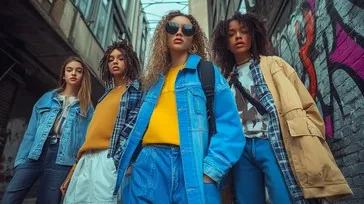
Photo: confident young diverse British models urban street style UK fashion, via images.stockcake.com
There's a version of the modelling dream that goes like this: a scout spots you in a shopping centre, you sign with an agency, and the rest is runway history. No connections required. No trust fund necessary. Just a face, a frame, and a bit of luck.
For plenty of working-class models across the UK, that fantasy falls apart the moment they open their mouths.
"I was told — not unkindly, but very clearly — that I needed to 'soften' my accent before client meetings," says Demi, 24, who grew up in Barnsley and moved to London at nineteen to pursue modelling. "It wasn't about being understood. It was about sounding a certain way. Sounding like I fit."
She's far from alone.
The Filter Nobody Admits Exists
Class bias in the British fashion industry is one of those open secrets that rarely gets named out loud. Unlike conversations about race, size, or disability — where the industry has at least begun to acknowledge its failures — socioeconomic background remains a largely untouched subject. Nobody's putting out press releases about it. There are no pledges, no panels, no hashtags.
And yet, the filtering happens constantly.
It shows up in the quiet advice to "work on your presentation." In the casting briefs that describe a desired "polished" or "refined" look — language that, in practice, often codes for class as much as aesthetics. In the networking events held at private members' clubs in Mayfair that cost more to attend than a week's rent in Sheffield.
One casting director, who asked to remain anonymous, was refreshingly candid: "There's absolutely a bias, and most people in this industry won't admit it because it makes them sound awful. But clients come in with a feeling — a vibe they want — and that vibe is almost always rooted in a very specific, very middle-class idea of aspiration. Models who don't project that get quietly passed over."
Performing Poshness
What's particularly exhausting for working-class models isn't just the rejection — it's the performance required to avoid it.
Jordan, 27, from Middlesbrough, describes spending his early career essentially constructing an alternative identity for client-facing situations. "I'd researched which restaurants to name-drop, which holidays to mention, how to talk about where I'd 'spent time' rather than where I grew up. It was like method acting, except the character was just... someone who wasn't me."
This kind of code-switching takes a toll. Research consistently shows that the psychological cost of masking your authentic identity — whether that's your accent, your background, or your family's circumstances — contributes significantly to anxiety and burnout. In an industry already notorious for its mental health pressures, adding the weight of class performance is a particular cruelty.
And ironically, it doesn't even reliably work. "The thing is, people from certain backgrounds can usually tell," says Priya, a stylist who has worked across London Fashion Week for over a decade. "There's a fluency to class that's hard to fake. So you end up in this miserable middle ground — too polished to be authentically yourself, not polished enough to be fully accepted."
The Economics of Getting In
Beyond the social performance, there's a brutally practical dimension to class barriers in modelling that rarely gets discussed: the upfront costs.
Building a portfolio, travelling to castings in London or Manchester, investing in the kind of wardrobe that reads as 'industry-ready' — none of it is cheap. For models from lower-income backgrounds, the financial ask can be prohibitive before a single booking is secured.
"I was working three jobs alongside castings in my first year," says Demi. "I couldn't afford to be strategic about my career because I was too busy surviving. The models who could afford to wait, to take unpaid test shoots, to fly to Paris for a go-see — they got ahead faster. Not because they were more talented. Because they had a financial cushion I didn't."
Some agencies offer advances or support costs for models they're investing in — but access to those arrangements often depends on already having the kind of presence, network, or look that signals long-term commercial value. Which, of course, tends to favour those who've already had more opportunities.
It's a cycle that's easier to describe than to break.
The Reclamation
Here's what's shifting, though — slowly, but genuinely.
A growing number of models are deciding that hiding where they're from isn't a strategy worth pursuing. They're leading with their accents, their council estate upbringings, their nan's terraced house in Doncaster. And they're finding that, particularly in an era when audiences are deeply sceptical of manufactured aspiration, authenticity has commercial currency.
"I used to think my background was something to overcome," says Jordan. "Now I think it's the most interesting thing about me. Brands want realness. They're bored of the same veneer. I'm not performing anymore, and weirdly, I'm getting more work."
Social media has been part of this shift. TikTok and Instagram have given models the ability to build audiences on their own terms, presenting their full selves rather than the edited version agencies once insisted upon. A Northern accent, a frank post about struggling to afford castings, a video filmed in a flat that doesn't look like an interior design shoot — these things connect with audiences in ways that polished, class-neutral content often doesn't.
There are also organisations working to widen access structurally. Initiatives offering subsidised portfolio shoots, mentoring programmes pairing working-class talent with established industry figures, and agencies actively recruiting outside the London-centric pipeline are all part of a growing counter-movement.
None of it is enough yet. But it's a start.
What the Industry Actually Owes
Ultimately, the responsibility for dismantling class bias can't rest entirely with the models navigating it. The industry needs to interrogate its own defaults — the assumptions baked into casting briefs, the social rituals that exclude people without connections or cash, the unspoken preference for a certain kind of background that masquerades as a preference for a certain kind of "look."
For a sector that increasingly markets itself on the language of diversity and inclusion, continuing to filter by class while celebrating progress on other fronts is, at best, inconsistent — and at worst, a way of appearing progressive while protecting the same old hierarchies.
Demi puts it simply: "I don't want to sand down my edges to fit into someone else's idea of what a model should sound like, look like, or come from. My story is part of what I bring. If you can't see the value in that, that's your loss — and honestly, your industry's loss too."
She's right. And it's time more people in British fashion said so out loud.