Beyond Him and Her: Meet the Models and Casting Directors Dismantling Gender in British Fashion
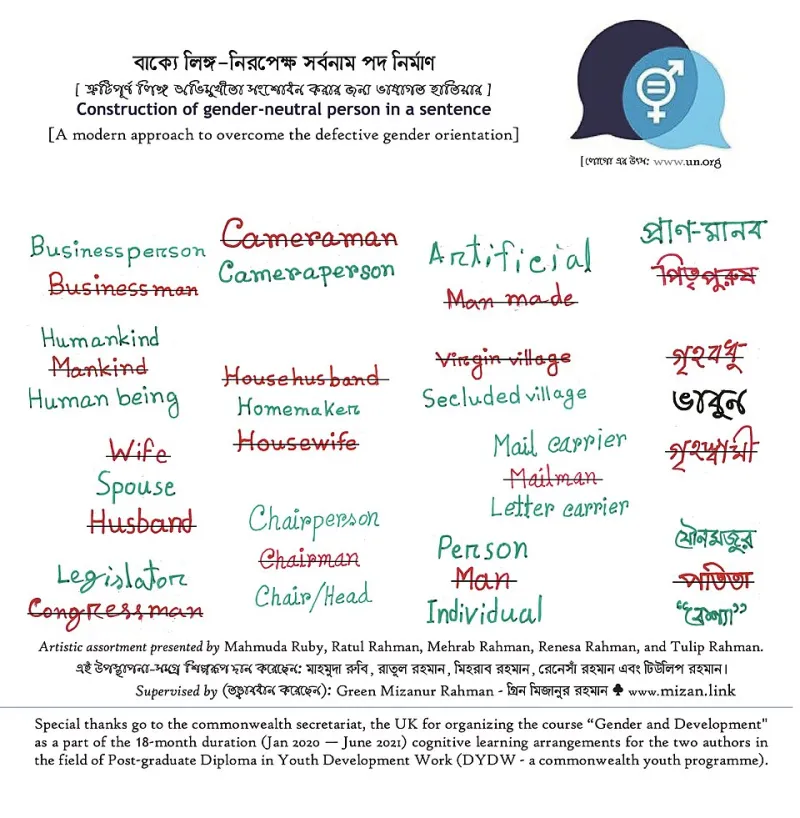
Photo: RatulAsian, CC BY-SA 4.0, via Wikimedia Commons
A Fitting Room That Fits Everyone
Walk into most British fashion retailers and the layout is immediately familiar: men's on one floor, women's on another, the signage clear and unambiguous. The industry has been organised this way for so long that it can feel like a law of nature rather than a commercial choice.
But spend an afternoon with the casting directors, designers, and models who are reshaping the UK's fashion landscape, and you start to see that binary for what it really is: a convention. And conventions, it turns out, can be changed.
Over the past five years, something has shifted in British fashion. Not just in the high-concept editorial world of Another Magazine or the avant-garde corners of London Fashion Week, but in real casting calls, genuine commercial briefs, and the day-to-day conversations happening in agencies from Glasgow to Brighton. Non-binary and gender-non-conforming models are no longer a novelty booking — increasingly, they're a first call.
The Casting Room Is Changing Its Language
Sam Whitfield has been working in casting for eleven years. When they started out, briefs were almost universally binary: "female, 5'9", size 8-10" or "male, 6'1", athletic build." Today, the briefs landing in their inbox look quite different.
"I'm getting more and more clients who specify 'gender-fluid presentation welcome' or 'open to all gender expressions,'" Sam explains. "And it's not just the indie labels or the activist brands. I've had high street clients, beauty brands, even a couple of sportswear companies come to me with genuinely open briefs. The commercial world is catching up."
Part of what's driving this shift is generational. Gen Z consumers — now a significant chunk of the UK's fashion-buying public — have grown up with a far more fluid understanding of gender identity. They find rigid his-and-hers marketing not just dated but actively off-putting. Brands that want to speak to this audience authentically are realising they need to rethink not just their casting but their entire visual language.
"It's not tokenism when it's baked into the concept from the start," Sam adds. "The briefs that work best are the ones where the client has genuinely thought about who they want to reach, and they've realised that gender-non-conforming representation is part of that answer — not an afterthought."
Voices From the Runway
For the models themselves, the shift is palpable — though they're quick to point out that progress is uneven.
River Ashton, 22, from Bristol, uses they/them pronouns and has been modelling professionally for two years after being scouted through Instagram. Their bookings have ranged from independent jewellery brands to a campaign for a major British cosmetics label — work that would have been almost unimaginable for a non-binary model a decade ago.
"There are shoots where I feel completely seen," River says. "The creative team gets it, the styling is right, nobody asks me to 'butch up' or 'soften down.' And then there are bookings where you can tell the client sees you as a statement rather than a person. You become their diversity checkbox."
This distinction — between genuine inclusion and performative gesture — comes up again and again in conversations with non-binary models working in the UK today. The industry is opening up, but the opening isn't always graceful.
Alex Morrow, a 27-year-old model from Edinburgh who identifies as non-binary and has worked extensively in menswear campaigns, describes the challenge of navigating spaces that are technically more open but culturally still quite rigid. "I've been booked for 'menswear' and then had a stylist try to put me in things that felt like a costume rather than clothes. The booking was progressive on paper. The execution wasn't."
Both River and Alex are vocal about the importance of non-binary people being involved in creative decisions, not just cast as faces. When the photographer, the stylist, and the art director all understand gender fluidity from the inside, the work reflects that. When they don't, even the most well-intentioned brief can miss the mark.
Designers Leading From the Front
Some of the most exciting work dismantling gender in British fashion is happening at the design level, before the casting call is even written.
A growing cohort of UK designers — many of them graduates of Central Saint Martins or the Royal College of Art — are building collections that refuse to be divided along gender lines. Not androgynous in the old-school, vaguely masculine-for-women sense, but genuinely ungendered: clothes designed for bodies and personalities rather than chromosomes.
When these designers cast their runway shows and lookbooks, they're not looking for a particular gender presentation. They're looking for movement, personality, and presence. The result is shows that feel genuinely different — not because of a gimmick, but because the people walking the runway are there because they're right for the clothes, full stop.
"I don't think in terms of menswear and womenswear," says one emerging London-based designer whose graduate collection earned significant press attention last year. "I think in terms of the person wearing the piece. What do they want to project? What does the garment allow them to be? Gender is almost irrelevant to that conversation."
The Business Case Nobody Should Need to Make
Progressive values aside, there's a straightforward commercial argument for gender-inclusive casting that even the most tradition-minded brand director should find compelling.
The UK's non-binary and gender-non-conforming population is growing — or rather, it's always existed and is now more visible and more willing to spend money with brands that respect their identity. Research consistently shows that LGBTQ+ consumers have strong brand loyalty and actively seek out companies that represent them authentically. Inclusive casting isn't charity. It's smart business.
Beyond the direct audience, inclusive representation expands the aspirational appeal of fashion more broadly. Clothes that are shown on a diverse range of gender expressions invite more people into the fantasy. More people in the fantasy means more people reaching for their wallets.
Still Miles to Go
None of this means the work is done. Non-binary models still report being paid less than their binary counterparts for equivalent work. They're still frequently steered towards "edgy" or "alternative" campaigns rather than mainstream bookings. And the modelling industry's obsession with very specific physical standards — tall, slim, symmetrical — hasn't disappeared simply because the gender binary is loosening.
But the direction of travel is clear. The casting rooms are changing. The briefs are changing. The runways are changing. And the models leading that charge — people like River and Alex, and the dozens of others building careers in a more open industry — are proving every day that fashion is bigger, bolder, and far more interesting when it makes room for everyone.
At Modelling4All, that's not a trend we're watching from the sidelines. It's the entire point. Every body. Every story. Every runway — and that means every gender expression, too.