Your Face, Their Forever Licence: The Digital Twin Clauses UK Models Need to Read Twice
Photo: San Diego Air & Space Museum Archives, Public domain, via Wikimedia Commons
Imagine signing a booking for a shampoo ad and, two years later, seeing your face sell banking apps, festival tickets and a brand you'd never touch. Now imagine you never shot a single frame of it. That's the promise and the threat of the digital twin clause.
In 2026, UK models are being asked to agree to digital replicas more often, and earlier, than most people realise. The wording rarely says 'we will own your face'. It says 'digital asset', 'synthetic performer', 'AI-generated likeness', 'reproduction rights' or 'derivative works'. It sits in a usage schedule, a release form or a 14-page production agreement. And once you've signed, the version of you on screen may keep working long after you've gone home.
This isn't legal advice. It is a field guide to the questions worth asking before you hand over a digital version of yourself.
The clause that outlives the shoot
A digital twin clause can cover far more than a single campaign. Look for words like 'perpetual', 'irrevocable', 'worldwide', 'all media now known or hereafter devised', 'sublicensable' and 'assignable'. On their own, some of these are normal in commercial contracts. Together, they can mean a brand — or whoever buys that brand — can reuse your likeness for years, in formats that haven't been invented yet, without coming back to you.
Ask what happens after the campaign ends. Is there a time limit? A territory limit? A category limit, so your face can't end up fronting a product you'd refuse to promote? Can the brand sublicense your replica to another company? Can they use it to train an AI model? If the answer is 'it's standard', ask to see the standard. Standard for whom?
What 'digital replica' actually covers
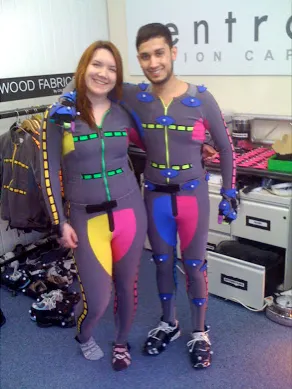
A replica isn't just a photograph of your face. It can include your voice, your movement, your mannerisms, your walk, your resting expression and the way you tilt your head. It can be built from a scan, a photoshoot, a video reel or a few minutes of footage. It can be combined with someone else's body or performance.
That matters for models with distinctive features, visible differences, accents or movement styles. The things that make you bookable are also the things a digital replica is designed to capture. If the contract doesn't define what is being replicated, assume the widest possible reading.
Duration, territory and the forever problem
A one-year UK licence is not the same as a 10-year global licence. A 10-year global licence is not the same as 'in perpetuity'. And 'in perpetuity' is not the same as 'we'll ask you first'.
Ask for a clear end date. Ask which countries are covered. Ask whether the replica can be used in sensitive categories — health, finance, politics, alcohol, gambling, diet products — and whether you can veto those uses. Ask whether you'll be told each time the replica is used, or whether you'll have to find out by scrolling.
Under UK data protection law, your likeness can count as personal data, especially when it's used to identify you or create a biometric profile. Consent needs to be specific, informed and capable of being withdrawn. But a contract can complicate that picture, so don't assume a tick box is the same as meaningful control. If the deal matters, get a lawyer who understands image rights, data protection and entertainment contracts.
Reuse, retraining and the synthetic lookalike
One of the biggest red flags is a clause that lets a brand use your replica to train or improve an AI system. That can turn a single booking into free research and development. Your face helps build a tool that may later replace you — or replace models who look like you.
Ask whether your data will be used for training. Ask whether it will be retained after the campaign. Ask whether it can be deleted, and how you'd prove deletion. Ask whether the brand can create 'new performances' from your replica that you never performed. If the answer is yes, you're not just licensing a likeness; you're licensing a synthetic actor in your image.
What inclusive casting looks like when the face is fake
The pitch for AI faces is usually speed and cost. No travel, no fitting, no day rate, no awkward conversation about sample sizes. But cheap for the brand is not the same as good for the industry.
Synthetic faces are often trained on narrow beauty standards: symmetrical, able-bodied, young, thin, light-skinned, conventionally photogenic. When brands use AI to 'diversify' a campaign without hiring diverse models, inclusion becomes a skin-tone slider. A generated plus-size model is not a plus-size model. A generated disabled model is not a disabled model. A generated older face is not an older performer with a career, a community and a point of view.
If a brand wants the cultural credibility of inclusive casting, it should pay the people who provide it. Digital replicas can be a tool for a model's own business — a way to scale without burning out. They shouldn't become a way for brands to avoid hiring the bodies they claim to celebrate.
Questions to ask before you sign
- What exactly is being replicated: face, voice, movement, mannerisms, body scan?
- How long does the licence last, and can it be renewed without my consent?
- Which territories, media and product categories are covered?
- Can the replica be sublicensed, assigned or sold?
- Will my data be used to train AI models?
- Can I withdraw consent, and what happens to existing copies?
- Will I be credited, paid per use, or paid a one-off fee?
- What happens if I change my appearance, age, transition or gain/lose weight?
- Can I refuse uses that conflict with my values?
- Is there a deletion or audit clause?
The bottom line
Your face is your livelihood and part of your identity, even where the law is still catching up. A digital twin clause can be a smart business move or a bad deal dressed in tech language. Read it twice. Ask for limits. Ask for payment that reflects the length and breadth of the licence. And remember: if a brand can afford to build a synthetic version of you, it can afford to negotiate with the real one.