The Rail Doesn't Lie: What 'Sample Size' Really Means on a UK Set
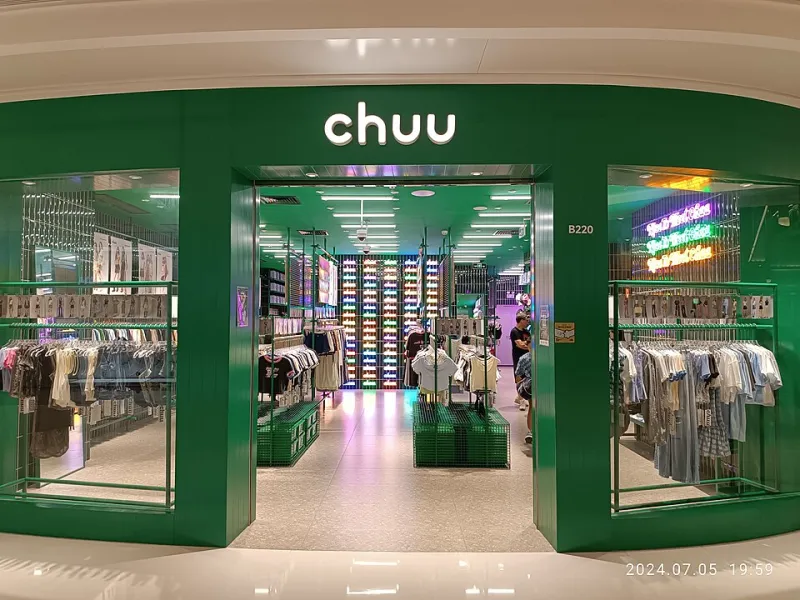
Photo: Hausheuim Toamwd 066, CC0, via Wikimedia Commons
The email says 'sample size'. You know what that means: bring your smallest self, your best pins and a willingness to make it work. The campaign copy says every body. The rail says one body.
This is one of the quiet contradictions of UK fashion in 2026. Brands have got louder about inclusion. Casting briefs mention diversity. Social teams talk about real bodies. And then the samples arrive in a UK 8, the fit model is a UK 8, and the model booked for the 'inclusive' shoot is asked to hold her breath while someone clips the back of the dress.
The gap between the campaign and the clothes rail
Sample sizes exist for a reason. Brands produce one or two samples before a full size range is signed off. It's cheaper to shoot one sample and grade the rest later. But the sample size isn't neutral. It's a choice about whose body becomes the default.
Many UK womenswear samples are still cut in a UK 8 or 10. Some luxury houses work smaller. Menswear samples often sit around a 38 or 40 chest. Meanwhile, the average UK woman is often reported to wear a size 16. That gap doesn't disappear because a brand puts a curve model in the campaign. It gets pushed onto the model in the fitting room.
Why 'sample size' is still a size small
A sample is usually based on a fit model. If the fit model is a UK 8, the sample is a UK 8. If the fit model is young, able-bodied and straight-sized, the garment is designed around that body. Grading — the process of scaling a pattern up and down — can be done well or badly. Too often, it's done quickly and the fit falls apart above a certain size.
That's why a brand can sell a size 22 and still shoot its campaign on a size 8. The rail isn't the range. The rail is the sample. And the model is expected to bridge the gap.
The 'make it work' tax
When a sample doesn't fit, the model pays. You buy the right underwear. You bring the right bra. You travel to a fitting that runs long. You spend extra time being pinned, clamped and photographed from angles that hide the gap. You hold a pose that hurts. You get paid the same day rate — or less, if the shoot is cut short because the clothes don't work.
The tax isn't just financial. It's physical and emotional. It's the minute you realise the team sees your body as a problem to be solved with clips. It's the joke about 'just breathe in'. It's the photographer saying 'we'll fix it in post' while you're the one who has to stand still for another hour.
Discomfort isn't professionalism. Being able to tolerate a badly fitting garment doesn't make you easier to work with. It makes you a person who has learned to absorb someone else's planning failure.
What to ask before you say yes
Ask for the size chart, not the vibe. Before you accept a booking, find out what size the samples are, how many sizes will be on set, and whether the rail includes your size. Ask who the fit model is. Ask whether the garments have been graded and whether an alterations fitter will be present. Ask whether you'll be paid for fitting time.
Useful questions include:
- What size are the samples, and what sizes are available on the rail?
- Will there be a fitter or tailor on set, and is their time built into the schedule?
- Are the samples graded from a fit model, and what size is that fit model?
- Will I be asked to wear garments that don't close, pin or clamp?
- Will images be retouched to remove pin marks or fit issues?
- Is there a plan to shoot the product on a model the sample actually fits?
- Will I be paid extra for additional fitting time or wardrobe tests?
You don't have to ask all of these at once. But if the answers are vague, treat that as information. 'We'll make it work' is not a size chart.
When to walk
You can decline a booking that requires you to be physically uncomfortable for hours. You can say no to a garment that won't close. You can ask for a break. You can ask for a different sample. You can ask for the shot to be rescheduled with a fitting that works.
If a brand can afford the campaign, the photographer, the location and the retouching, it can afford a rail that fits the people in it. If it can't, that's not your emergency. It's a production problem — and it shouldn't be solved by your body.
The inclusive fix isn't a bigger pin
Real inclusion isn't one plus-size model standing very still in a sample that's been sliced open at the back. It's multiple samples. Fit models who reflect the customer. Time for proper alterations. Budgets that pay for both the model and the fitter. Campaigns that don't treat a size 16 as a special occasion.
The rail doesn't lie. If a brand wants to show every body, it needs clothes that can actually hold them.