When the Brief Says 'Performance Capture': The UK Models Building Careers in Game Worlds
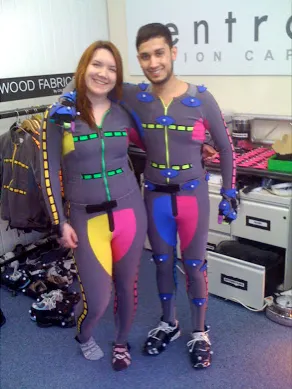
Photo: alex williams, CC BY-SA 3.0, via Wikimedia Commons
The booking request doesn't say 'modelling job'. It says 'performance capture artist, two days, Manchester'. Or 'virtual production stand-in, London'. Or 'immersive understudy, Cardiff'. For a growing number of UK models, this is the work.
It's still modelling, in the sense that your body is the product. But you're not holding a pose for a stills camera. You're performing a character in a suit covered in markers, or reacting to a tennis ball on a stick, or walking through a volume of cameras so that a game studio can turn your movement into something playable. The brief may come from a casting director, a game studio, a motion capture house or a theatre company. It may never appear on a traditional agency's books.
The booking that doesn't look like a booking
Motion capture — mocap, for short — records an actor's movement and translates it into digital animation. Facial capture does the same for expressions. Virtual production uses LED walls and real-time engines to put performers inside digital environments on set. Immersive theatre and location-based experiences ask performers to move through physical and digital spaces at the same time.
For models, this is a different skill set. You need to be able to take direction, hold a character, move safely and repeat a performance take after take. You need to be comfortable with tech. You need to understand that the final character may not look like you — but your movement, timing and choices will be in there.
What motion capture actually asks of you
A mocap day can be physically demanding. You might be walking, running, falling, fighting, dancing or crawling. You might wear a tight suit with reflective markers, a head rig and sometimes a facial capture helmet. You might work in a large studio with dozens of cameras, or a smaller volume with a handful of staff. You might do the same 15-second sequence 20 times while the director adjusts the timing.
The skills that matter are movement, stamina, improvisation, voice and patience. If you have dance, martial arts, horse riding, swimming, sign language, accents or stunt training, say so. If you can fall safely, that's a skill. If you can react to nothing and make it look real, that's a skill. If you can stay warm, hydrated and professional through a long technical day, that's a skill too.
The portfolio that gets you seen
A traditional book of pretty pictures won't tell a mocap studio whether you can perform. You need a performance reel. That can be a 30-second clip of you moving, reacting, fighting, dancing or playing a character. Full-body shots help. A voice reel helps. A list of skills helps. A short video of you in a movement class can be more useful than 10 editorial spreads.
Put 'performance capture', 'mocap', 'virtual production' and 'immersive' in your profile. If you have footage from a student game, a fringe theatre show or a VR project, use it. Credit every job you can. Ask for footage you're allowed to share. Build a reel that shows range, not just beauty.
Why inclusive bodies make better digital worlds
Games and virtual productions have spent years defaulting to a narrow kind of avatar: young, thin, able-bodied, usually white, often male. Players notice. If every non-player character has the same body, the world feels fake. If every hero looks the same, the storytelling shrinks.
Studios are starting to cast for range. Disabled performers are being brought in for characters who use wheelchairs, crutches or prosthetics — not as a tick-box, but because the movement needs to be believable. Plus-size performers are being cast for characters who aren't a punchline. Older performers are playing actual older characters. Trans and non-binary performers are helping build worlds where gender isn't a binary switch.
Inclusion here isn't a quota. It's rendering reality. A digital world that only reflects one body type isn't more immersive; it's less convincing. Diverse talent is becoming a technical asset, not a diversity add-on.
Getting in without an agency key
Traditional modelling agencies may not have a mocap board. Look at game studios, motion capture houses, virtual production companies, immersive theatre companies and casting directors who specialise in interactive work. Equity and Bectu networks are worth checking. So are UK games industry events, regional screen agencies and studio open calls.
Ask about the contract before you get excited. Is it a day rate or a buyout? Does the buyout cover the game, future DLC, marketing, sequels or AI training? Will you be credited? Will you be asked to sign an NDA that stops you using the footage in your reel? What are the hours, and is there a wardrobe or movement test? If the job involves stunts or physical risk, ask about insurance and training.
Start small, build a reel
You don't need to wait for a AAA game. Student projects, indie studios, immersive theatre, escape rooms, VR experiences and virtual fashion shows all need performers. Take a movement class. Learn to fall safely. Get a voice reel. Say yes to a job that gives you footage and a credit. Then say yes to a bigger one.
The path isn't linear. But for UK models who want to use their bodies and performance skills in a different way, the game worlds are already hiring. They just might not call it modelling.