Wired Differently, Working Brilliantly: The Neurodivergent Models Rewriting British Fashion's Rulebook
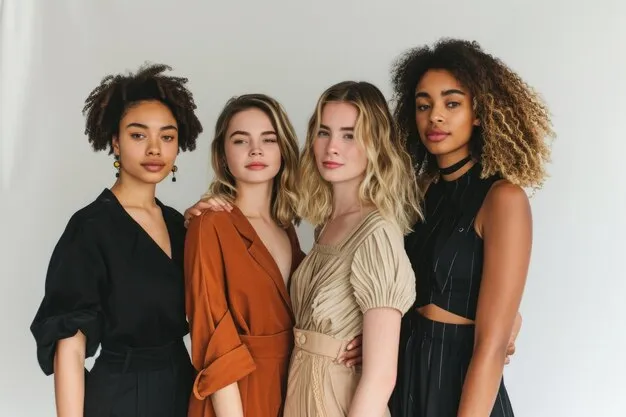
Photo: confident young diverse model backstage fashion shoot UK studio thoughtful creative, via img.freepik.com
Fashion Wasn't Built for Brains Like Theirs. They're Changing It Anyway.
The call sheet says 7am. The studio is loud, chaotic, full of strangers. The photographer gives instructions quickly, expects immediate responses, and moves on. The stylist touches your hair without asking. You're expected to hit a mark, hold a pose, take direction, and look effortless — all at once, all day, often without a proper break.
For many models, a shoot day is exhausting but manageable. For a neurodivergent model — someone with autism, ADHD, dyslexia, dyspraxia, or any number of other neurological differences — it can feel like running a marathon in someone else's shoes.
And yet, a growing number of neurodivergent models are not only surviving British fashion's notoriously demanding environment — they're thriving in it, reshaping it, and refusing to mask their way to success.
"I Didn't Know the Industry Could Work for Me"
Zoe Carter, 24, was diagnosed with autism at 19 — the same year she was first scouted at a charity fashion show in Sheffield. She'd always loved clothes, always had an instinctive eye for colour and proportion, but the traditional modelling world felt like a foreign country.
"The unwritten rules were the hardest part," she tells us. "Everyone seemed to know how you were supposed to behave on set, what to say, how to be — and nobody told you. I'd take things literally, miss social cues, and then feel mortified afterwards. I nearly quit twice in the first year."
What kept her going was finding a casting agency that understood her needs — and adjusted accordingly. Pre-shoot briefings with clear written instructions. A quiet space on set for sensory breaks. A contact person she could ask 'obvious' questions without judgement.
"Once those things were in place, I realised I actually had advantages other models didn't," Zoe says. "My attention to detail is extraordinary. I notice things in a frame that other people miss. I can hold a specific expression for longer than most people because I'm genuinely focused. Autism isn't a disadvantage in this job — the environment was the disadvantage. And that's fixable."
ADHD on the Runway: Chaos or Creative Power?
If autism in modelling tends to surface around sensory overwhelm and social ambiguity, ADHD brings its own distinct texture to the industry. Marcus Obi, 27, a menswear model from East London, was diagnosed with ADHD at 22 after years of being told he was "unfocused" and "difficult."
"I'd forget call times, lose things, get distracted mid-shoot," he admits. "But I also had this energy that photographers loved. I can't do static poses for long — I get restless — but that restlessness translates on camera. My best shots come from movement, spontaneity. I'm not following a script; I'm genuinely reacting."
Marcus now works almost exclusively with agencies and brands that understand his working style. He uses a detailed digital calendar, has a trusted point of contact at every shoot, and is upfront about his diagnosis with clients he trusts.
"The stigma is real," he acknowledges. "Some clients hear ADHD and assume unreliable. But the ones who've actually worked with me know that when I'm in the right environment, I deliver. Consistently."
What the Industry Needs to Understand
Dr. Simone Adeyemi, a neurodiversity consultant who works with several UK creative industries including fashion, is direct about where the problem lies.
"The modelling industry has historically operated on the assumption that there is one correct way to be a model — one correct way to communicate, to receive direction, to manage a working day," she explains. "That assumption excludes a huge amount of talent and, frankly, it's not even based on any evidence that it produces better work. It's just tradition."
She points to practical, low-cost adjustments that can make an enormous difference: sending detailed briefs in advance rather than relying on verbal instructions on the day; allowing models to flag sensory triggers before a shoot; building short, structured breaks into the schedule; and training creative directors to give feedback clearly rather than relying on vague, abstract language.
"None of this is radical," Dr. Adeyemi says. "It's just good practice. And it benefits everyone on set, not just neurodivergent talent."
Inclusive Agencies: The Landscape Is Shifting
A handful of UK-based agencies are beginning to lead the way on neurodivergent inclusion, and their approach is instructive. Rather than treating neurodivergence as something to disclose reluctantly, they're building it into their talent development model from the start.
One London-based agency, which asked not to be named ahead of a formal announcement, has introduced what it calls a 'working style profile' for every model on its books — neurodivergent or not. The profile covers communication preferences, sensory considerations, peak performance conditions, and any accommodations that might help the model do their best work.
"We found that when we started asking these questions for neurodivergent talent, neurotypical models started asking for the same thing," says the agency's talent director. "Turns out everyone has preferences about how they work best. We'd just never thought to ask."
Advice for Aspiring Neurodivergent Models
For anyone who is neurodivergent and considering a career in modelling, the message from those already working in the industry is consistent: your brain is not the obstacle. The system is — and the system is changing.
Here's what the models and advocates we spoke to suggest:
Know your non-negotiables. Identify the accommodations that genuinely make a difference to your performance — whether that's written briefs, sensory breaks, or a quieter green room — and treat them as professional requirements, not personal requests.
Find your people early. Seek out agencies and casting directors with a track record of working with neurodivergent talent. Ask directly. The ones worth working with will welcome the conversation.
You don't owe anyone your diagnosis. Disclosure is personal. Share what's helpful, when it's helpful, with people who've earned your trust. You are under no obligation to explain your neurology to every client.
Your difference is a direction, not a detour. The qualities that make neurodivergent people challenging for rigid systems — intensity, unconventional thinking, hyperfocus, raw authenticity — are exactly what the most interesting work in fashion is looking for.
The Bigger Picture
British fashion has spent decades celebrating a very narrow idea of what a model looks like, moves like, and thinks like. The industry is slowly, sometimes reluctantly, widening that idea to include different bodies, ages, and backgrounds.
Neurodivergent models are part of that expansion — and in many ways, they're pushing it further than anyone expected. Because the accommodations they need aren't just acts of inclusion. They're invitations for the industry to ask a more fundamental question: why were things this way in the first place?
At Modelling4All, we think every aspiring model — regardless of how their brain is wired — deserves a runway. The industry just needs to build one wide enough for everyone.