DMs, Demands, and Dead Ends: The Online Harassment UK Models Can't Escape
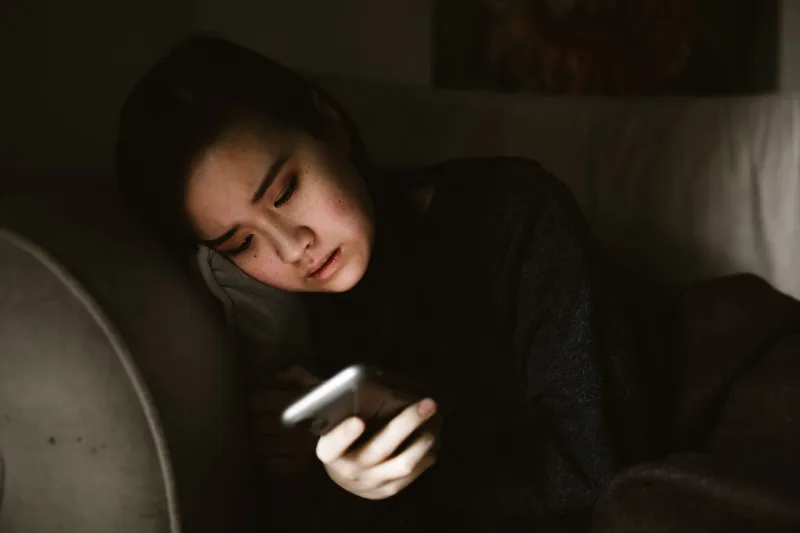
It starts, almost always, professionally. A follow request from a photographer whose work you've admired. A DM from someone claiming to represent a boutique agency in Manchester or Bristol or Edinburgh. A WhatsApp message forwarded through a mutual contact, saying they've seen your portfolio and they'd love to work with you.
And then, gradually — or sometimes not gradually at all — something shifts.
For a growing number of models across the UK, the boundary between digital networking and digital harassment has become dangerously blurred. And unlike the more visible, physical forms of predatory behaviour that the industry has slowly — too slowly — begun to reckon with, online harassment is still largely treated as a personal problem rather than a professional one.
It isn't. It never was.
"It Felt Like Networking Until It Didn't"
Zara, a 24-year-old model from Leeds, describes the experience that's now become grimly familiar to her and many of her peers. A photographer she'd worked with once — a legitimate job, a small commercial shoot — began messaging her on Instagram shortly afterwards. At first, it was professional. Questions about availability, comments on her latest posts.
"Then it started getting weird," she says. "He'd message late at night. He'd say things like, 'I could really help your career if you trusted me more.' When I didn't reply, he'd send follow-up messages asking if he'd offended me. It was exhausting. I felt like I was managing him constantly."
When Zara mentioned it to a booker she trusted, the response was deflating. "She said, 'Oh, he's like that with everyone, just ignore him.' Like it was my job to absorb it."
This pattern — the minimising, the normalising, the redirecting of responsibility back onto the person being harassed — is something models across the country describe with weary consistency. The harassment itself is distressing enough. The institutional shrug that follows it is its own kind of damage.
The Platforms Are Not Protecting You
Social media companies have made a great deal of noise about safety tools — restricted messaging, content warnings, block functions. In practice, models report that these tools do very little when the person harassing you is also someone with professional leverage over you.
Blocking a photographer who's connected to half the casting directors in your city feels like career self-sabotage. Restricting a booker's messages when they control your bookings feels impossible. The power dynamics that make in-person harassment so difficult to address don't disappear online — they just take on a new shape.
Amara, a model based in Birmingham, received a series of increasingly explicit WhatsApp voice notes from a man who described himself as a brand consultant. He'd been introduced to her through what appeared to be a legitimate industry contact. "He knew things about my schedule, my agency, upcoming jobs," she says. "It made me feel like I couldn't just cut contact without consequences I couldn't see coming."
She reported the messages to Instagram — where he'd also been messaging her — and received an automated response telling her the account didn't violate community guidelines. "I had voice notes of this man saying things I can't repeat, and the platform said it was fine. What are the guidelines even for?"
Where Does Networking End and Grooming Begin?
This is the question that legal professionals working in this space say the industry urgently needs to answer.
Solicitor Priya Mehta, who has advised clients in the creative industries on harassment and employment law, explains that the informal nature of modelling work makes it particularly vulnerable to abuse. "Many models are self-employed or working through short-term contracts. They don't have the same workplace protections that an employee in a traditional setting would have. And because so much communication happens informally — via DMs, personal numbers, social media — it becomes very difficult to establish what constitutes professional conduct."
She notes that persistent, unwanted contact that causes distress can, in some circumstances, constitute harassment under the Protection from Harassment Act 1997, regardless of whether it happens in person or online. "The medium doesn't change the legal definition. What matters is the pattern of behaviour and its impact on the recipient."
The problem, she adds, is that many models don't know this — and even those who do face significant barriers when it comes to actually reporting and pursuing a complaint.
Why Reporting Often Goes Nowhere
The models we spoke to described a reporting landscape that felt designed to discourage them. Formal complaints to agencies frequently went unacknowledged or resulted in vague assurances that the matter would be "looked into." Police reports, where models had the courage and energy to make them, were often met with confusion about jurisdiction or relevance — particularly where the harassment had taken place across multiple platforms.
Industry bodies in the UK modelling sector have been slow to establish clear, accessible reporting mechanisms for digital harassment. The British Fashion Council has made commitments around inclusion and wellbeing in recent years, but models working outside the prestige end of the industry — which is most models — report feeling invisible to these conversations.
"I work regional commercial jobs," says Danielle, a model from Newcastle. "Nobody from a council or a body is looking out for me. I'm just out here trying not to get harassed and trying to keep my bookings."
Protecting Yourself: What You Can Actually Do
While the systemic failures get addressed — and they must be — there are practical steps you can take right now to protect yourself and build a record if things go wrong.
Document everything. Screenshot every message, note the date and time, and save it somewhere outside the app — a private folder on your phone, an email to yourself, a cloud storage account. Platforms can delete accounts and messages can be unsent. Your record is your evidence.
Use separate accounts where possible. Consider keeping a public professional profile and a private personal one. You don't owe anyone immediate access to your personal contact details.
Trust the discomfort. If a message makes you feel uneasy, that feeling is information. You don't need to wait until something is explicitly threatening before you take it seriously.
Tell someone. A fellow model, a trusted friend, a family member. Not because they can necessarily fix it, but because isolation is part of how this kind of behaviour sustains itself. The group chat exists for a reason.
Know your legal options. Citizens Advice can provide free guidance on harassment law. The police's online reporting tool (report.actionfraud.police.uk) can be used for certain types of online abuse. And if you're working through an agency, you have the right to make a formal complaint in writing — and to keep a copy of it.
The Industry Owes You More Than This
Here's the thing: none of this should be your problem to manage alone. The responsibility for creating safe professional environments — including digital ones — lies with the industry, with platforms, and with the individuals who choose to abuse their access and influence.
Modelling4All exists because we believe every person who wants to work in this industry deserves to do so without fear, without coercion, and without having to choose between their safety and their career. That belief doesn't stop at the studio door. It follows you home. It lives in your phone.
You deserve an industry that does the same.
If you've experienced harassment from an industry figure and want to share your story confidentially, you can reach us via our contact page. You are not alone, and your experience matters.