Sheep Fields to Shot Lists: The Models Building Careers Without Ever Moving to London
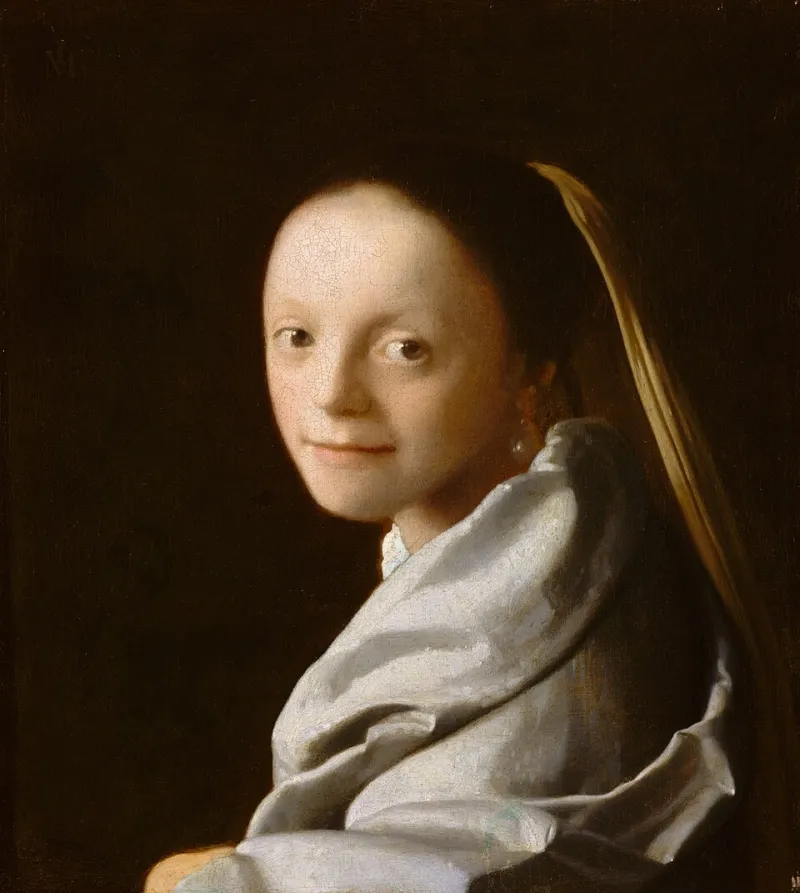
Photo: Johannes Vermeer, Public domain, via Wikimedia Commons
For decades, the advice to any aspiring British model was identical: get to London, get a flat you can't afford, and hope. The industry's geography was its gatekeeping. If you grew up in a market town in Cumbria or a fishing village in Cornwall, your options were simple — move, or give up.
A new generation of models is choosing neither.
The Countryside Is the Studio
Ask Jess, a model in her twenties based on her family's farm in the Yorkshire Dales, what her portfolio looks like and she laughs. 'Half of it was shot in a barn. Genuinely. One of the best images in my book is me in evening wear standing in a doorway with a tractor behind me.'
That image got her booked. Rural models are discovering that what the industry once framed as a disadvantage — no access to studios, no urban backdrop — is actually a distinctive aesthetic. Brands hungry for authenticity are shooting campaigns in fields, on piers, in village halls. Models who live there don't have to travel to the story; they are the story.
Local photographers, many of them equally shut out of the London scene, are collaborating on test shoots that cost nothing but time. The result is portfolios with character — work that doesn't look like it was shot in the same three Shoreditch lofts as everyone else's.
The Self-Produced Shoot, Rural Edition
When rural models do want controlled, polished content, they've become masters of the self-produced shoot. The formula is resourceful and repeatable: find a location with genuine visual interest — a walled garden, a coastal path, a disused mill — check whether it needs a small filming fee (many farms and estates happily say yes for a modest sum), book a local Airbnb or holiday let with good light, and bring in a photographer from the nearest town.
Split the costs, share the images, everyone's portfolio grows. It's the kind of scrappy, collaborative production that city models pay agencies to organise — except here, the models keep the relationships, the skills and the money.
The Portfolio Travels So You Don't Have To
The real unlock, of course, is digital. A model in rural Suffolk and a model in Hackney are now equally visible to a casting director in Soho — provided their online portfolio is strong, current and easy to find.
That's the quiet revolution: talent platforms and digital books have severed the link between postcode and opportunity. Clients increasingly book direct from online portfolios, hold castings over video call, and fly models in for shoot days rather than demanding relocation. A self-tape filmed against a nicely lit kitchen wall in Dumfriesshire competes with one filmed in a London flat-share — and often wins, because the light's better and the model slept properly the night before.
Widening Who Gets a Seat
This matters beyond individual careers. The modelling industry has long been accused of being narrow in every sense — and geography is one of the narrownesses nobody talks about enough. When the only route in runs through the capital, you filter out everyone who can't afford the move: working-class talent, carers, people with roots and responsibilities that don't fit a Zone 2 house-share.
Rural models building careers on their own terms aren't just hacking the system — they're evidence of what the industry looks like when the gate comes down. More accents. More faces. More stories that don't begin with 'I moved to London when I was eighteen.'
The runway, it turns out, doesn't care where you filmed your self-tape. It just cares that you showed up. And increasingly, the models showing up are doing it from the middle of a field — and they wouldn't have it any other way.